
How to use digital learning to extend the shelf life of skills in the workplace
A skill that has been learned is not necessarily a skill that lasts. Spaced repetition, microlearning, continuously updated content and traceability: here is how digital learning helps keep know-how alive over time.
A successful training session does not guarantee a lasting skill. A few weeks later, much of what was learned fades unless something brings it back. And even when a skill is well anchored, it can become outdated: regulations change, processes evolve, tools get updated.
For organisations, the challenge is no longer just to train, but to maintain skills over time. This is exactly where digital learning adds the most value.
Why skills have an expiry date
Three main forces wear skills down:
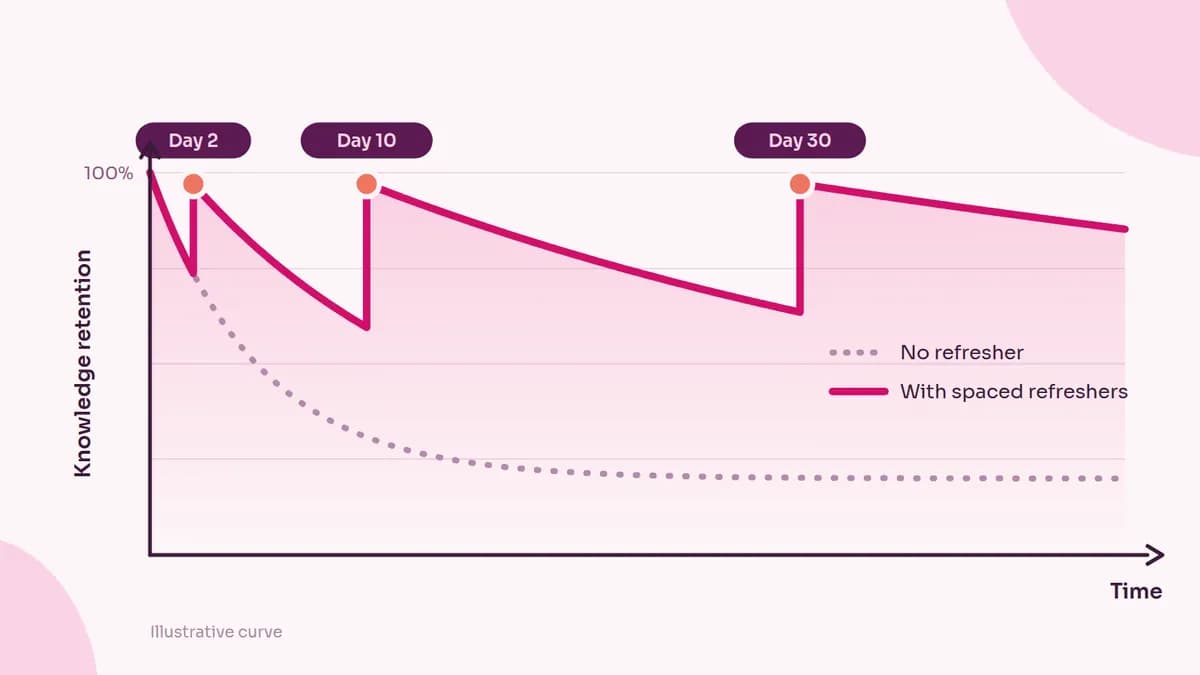
- Natural forgetting. Without reinforcement, memory declines quickly after learning: this is the well-known forgetting curve described by Hermann Ebbinghaus.
- Outdated content. Standards, procedures, software, product offers: what was right yesterday may no longer be right today.
- Regulatory deadlines. Licences, certifications and mandatory training require periodic refreshers, with evidence to provide during audits.
One-off classroom training struggles with all three. Digital learning turns a single event into an ongoing programme.
1. Anchor learning with spaced repetition
Instead of packing everything into a single day, digital learning makes it possible to schedule short refreshers at increasing intervals: a quiz on day 2, a case study on day 10, a scenario on day 30. Each reactivation strengthens memory and pushes back the point at which the skill starts to slip.
In practice, a core module can be followed by several micro-activities sent automatically by the LMS.
2. Train close to the job with microlearning
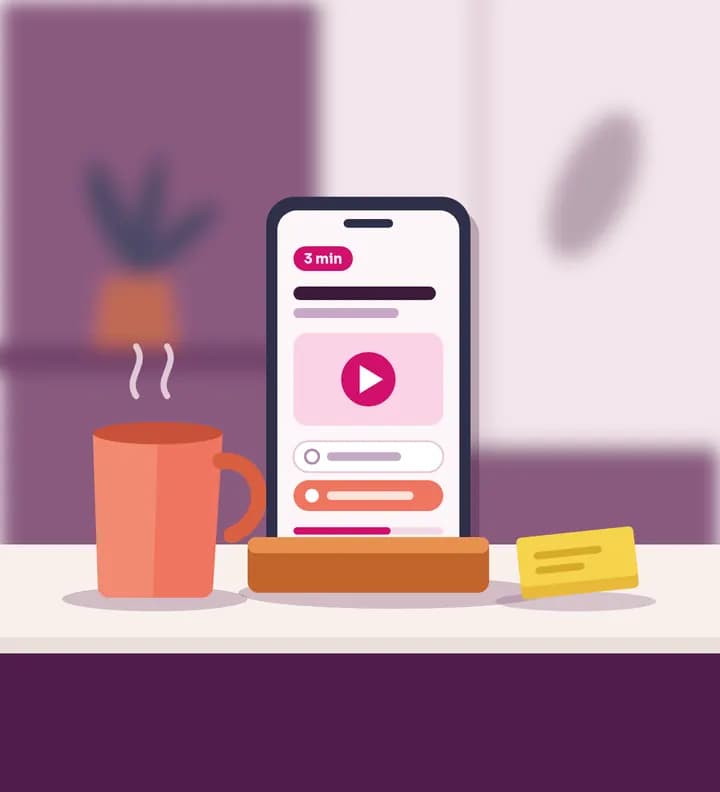
Skills last longer when they are used. Three-to-five-minute modules available on mobile let employees review a task or procedure right before carrying it out. Training becomes a performance resource rather than a distant memory.
This is especially useful for rare but critical tasks that people only perform a few times a year.
3. Update content as fast as practices change
A skill stays valid only if the content behind it does. With digital modules, there is no need to organise a whole new session: you simply edit the relevant screen and republish. That is, provided the update doesn't depend on an external provider or a technical team.
Authoring tools designed for subject-matter experts change the game: the people who know the procedure can fix the module themselves the day it changes.
4. Use assessment to trigger refreshers at the right time
Rather than retraining everyone at the same pace, assessment lets you target. Regular check-in tests reveal weak spots and direct each learner to only the content they need. You save time and focus effort where the skill is actually eroding.
5. Track to manage skill validity
Traceability is what turns a catalogue of modules into a real skills-maintenance programme. A well-configured LMS lets you:
- monitor expiry dates for licences and certifications;
- automatically remind employees before deadlines;
- produce reliable training records for audits and inspections;
- spot teams or topics where results are declining.
Criterion | One-off training | Continuous digital programme |
|---|---|---|
Retention | Relies on each person's memory | Scheduled spaced refreshers |
Access to content | During the session only | Anytime, including on the job |
Updates | A new session to organise | Edit and republish the module |
Personalisation | Same path for everyone | Targeted refreshers based on results |
Deadline tracking | Spreadsheets, manual reminders | Automatic alerts and reminders, audit-ready records |

Key takeaway
Extending the shelf life of a skill means combining regular refreshers, up-to-date content and rigorous tracking. Digital learning makes all three possible at scale, as long as the programme is designed as a long-term journey rather than a one-off event.
From one-off training to lasting skills
There is no need to transform everything at once. Start with an area where skill erosion is costly (safety, quality, compliance), break existing content into short modules, schedule a few refreshers and track the results.
With Thaleia, your experts create and update their own e-learning modules, with no technical skills required. And because a programme is only as good as its follow-up, Solunea also supports you in choosing an LMS and ensuring learning traceability.